Sep 29, 2026
Read More
Pet food is emerging as a major growth opportunity for Canadian pulses, driven by global demand for nutrition, sustainability, and premium ingredients.
May 28, 2026


As global agriculture navigates increasing uncertainty – from geopolitical pressures and shifting trade dynamics to evolving consumer expectations – market diversification is consistently top of mind for Canada’s pulse sector.
One area showing strong long-term potential is pet food.
According to Dr. Alex Rankovic, Pulse Canada’s pet food innovation consultant, the global pet food industry is creating new opportunities for Canadian pulse ingredients through a combination of sustained market growth, increasing premiumization, and rising interest in sustainable nutrition.
The pet food industry is evolving very quickly. What we’re seeing globally is a growing demand for ingredients that provide nutritional value, functionality, sustainability, and supply chain reliability. Canadian pulses align very well with those trends.
- Dr. Alex Rankovic
The global pet food industry is already substantial. In 2025, the sector is valued at approximately US$153 billion globally, with projections estimating growth to nearly US$248 billion by 2035.
Unlike many food categories, pet food has also demonstrated strong resilience during periods of economic uncertainty.
“Pet food tends to be relatively recession-resistant,” explained Dr. Rankovic. “Consumers continue prioritizing spending on pets, particularly as pets are increasingly viewed as members of the family.”
Several long-term trends continue to support growth across the sector:
These trends are helping drive demand for ingredients that provide both nutritional and functional benefits – creating opportunities for pulse ingredients in a range of formulations.
Pulse ingredients are already well established in many pet food applications globally.
According to recent data, approximately 106,000 tonnes of pulse flour were used in dog food formulations globally in 2023, along with an additional 32,000 tonnes in cat food.
Innovation activity has also accelerated significantly over the past decade. New pet food launches featuring pulse ingredients have tripled over the last ten years, with peas remaining the most common pulse ingredient used in formulations.
Today, approximately 30% of all new pet food launches globally include a pulse ingredient.
“Pulses offer several advantages in pet food,” said Dr. Rankovic. “They contribute protein and fibre, but they also provide important functional characteristics that can support formulation and processing performance.”
Pulse ingredients are increasingly appearing in dry kibble, wet foods, treats, and premium formulations focused on digestive health and ingredient diversification.
While North America remains the world’s largest pet food market, some of the fastest growth is occurring internationally, particularly in Asia Pacific and Latin America.
Pulse Canada has identified several priority regions where demand for premium pet food products continues to expand, including China, Thailand, Japan, South Korea, and Mexico.
“Many of these markets are experiencing rapid growth in pet ownership and premiumization,” said Dr. Rankovic. “Consumers are becoming more focused on sustainability and nutrition tailored to specific health and lifestyle needs, including digestive health, which creates additional opportunities for pulse ingredients.”
Thailand, for example, has emerged as a major global manufacturing hub and is currently the world’s second-largest pet food exporter. China has become the world’s second-largest pet food market overall, while Japan and South Korea continue to lead Asia in per-capita pet spending.
“These markets are important not only for whole pulse ingredients, but also for value-added ingredients like pulse proteins, flours, fibres, and starches,” she added.
Sustainability is also becoming an increasingly important factor in pet food purchasing decisions, particularly among younger consumers.
Major global pet food brands continue facing pressure to reduce emissions and improve sustainability across supply chains, creating additional interest in plant-based and environmentally efficient ingredients.
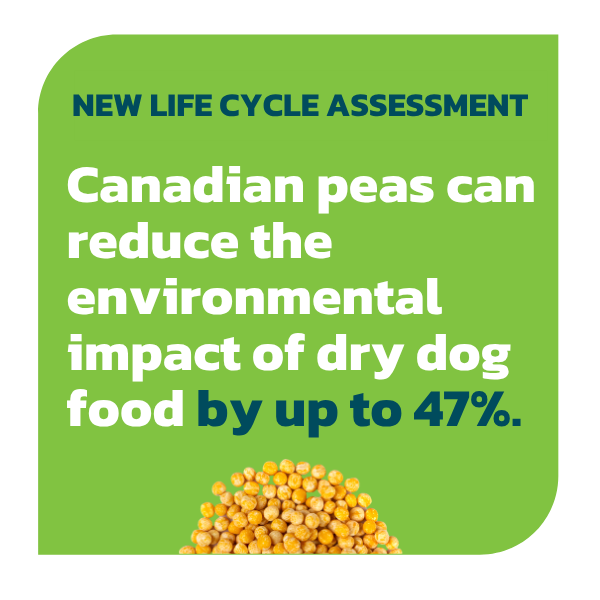
To better understand the environmental impact of pulse ingredients, Pulse Canada commissioned a Life Cycle Assessment examining the impact of reformulating dry dog food with Canadian peas.
The assessment found climate impacts could be reduced by as much as 47% compared to traditional formulations.
“That type of data matters,” said Dr. Rankovic. “Companies are actively looking for ways to reduce environmental impacts while still maintaining nutritional quality and product performance. Pulses can help support both objectives.”
Despite the growth potential, several barriers remain.
One of the most notable challenges in North America continues to be perceptions surrounding grain-free diets and dilated cardiomyopathy (DCM) following FDA reports released between 2018 and 2019.
“To date, no causal relationship has been established between pulse ingredients and DCM,” said Dr. Rankovic. “However, concerns around diet-related DCM continue to influence parts of the veterinary community and the pet food industry.”
Regulatory considerations also remain important. Not all pulse ingredients currently have Association of American Feed Control Officials (AAFCO) ingredient definitions or approvals, particularly faba bean-derived ingredients.
To help address these challenges, Pulse Canada has supported research initiatives in partnership with Protein Industries Canada and researchers at the University of Guelph, including studies evaluating the safety of low vicine/covicine faba bean ingredients in dog diets.
Results to date indicate those ingredients were well tolerated and support their safe use in adult dog food formulations.
In 2025, Pulse Canada established a dedicated pet food technical program focused on supporting industry engagement, research coordination, technical outreach, regulatory monitoring, and market intelligence.
“Our role is to help build confidence in pulse ingredients globally,” said Dr. Rankovic. “That means supporting the science, building relationships with manufacturers and nutritionists, and ensuring companies have access to practical technical information.”
For Canada’s pulse sector, the opportunity extends beyond pet food alone.
“This is ultimately about diversification and resilience,” said Dr. Rankovic. “Pet food represents a stable and growing demand opportunity that can support value-added processing, expand export channels, and help strengthen the long-term competitiveness of Canadian pulses.”
Our bi-monthly newsletter provides growers with timely, quick reads on the latest industry news and Pulse Canada’s work around the world.

Pulse Canada is the national association of growers, traders and processors of Canadian pulses, also known as lentils, dry peas, beans and chickpeas. Pulses are an essential part of a healthy and sustainable diet. Pulses and pulse ingredients can help food manufacturers improve the nutritional and functional quality of food products.