New Research Tackling Root Rot Head On
Activity 7 - Pulse Science Cluster Update
Jul 01, 2025
Read More

The Pulse Science Research Cluster is a five-year, industry-led research initiative designed to strengthen the long-term sustainability, resilience, and profitability of Canada’s pulse sector. Supported through the Government of Canada’s AgriScience Program and co-funded by the pulse industry, the Cluster brings together leading researchers across the country to address the most pressing production challenges facing peas, lentils, chickpeas, dry beans, and faba beans.
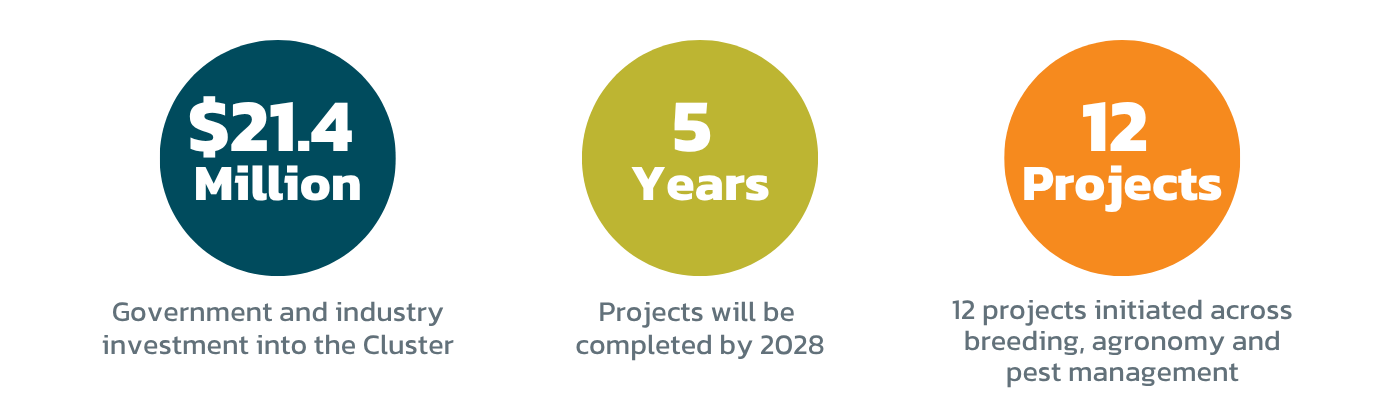
The purpose of the Cluster is simple: help Canadian pulse growers and industry thrive.
The AgriScience Program aims to accelerate innovation by providing funding and support for pre-commercial science activities and research that benefits the agriculture and agri-food sector, and Canadians.
The Program addresses challenges and opportunities under three priority areas: climate change and environment, economic growth and development, and sector resilience and societal challenges.
Through coordinated investment in breeding, agronomy, and disease management, the program aims to deliver:
By accelerating scientific progress across these areas, the Cluster ensures growers have the genetics, management tools, and research-backed insights they need to remain competitive in a changing climate and global marketplace.
The Cluster includes a portfolio of research projects that fall into high-priority themes identified by growers and the pulse industry:
A major focus is tackling diseases that limit yield and profitability. This includes breeding for resistance in peas, lentils, chickpeas, dry beans, and faba beans, along with developing better diagnostics and tools to support on-farm decision-making.
Root rot continues to be one of the most significant challenges in pulse production. Cluster projects explore soil diagnostics, microbial interactions, nutrient management, predictive imaging, and new management practices to reduce disease severity and support more reliable yields.
Modern breeding technologies — such as genomic selection, UAV-based phenotyping, and large-scale multi-site trials — are helping researchers develop improved varieties more quickly and with greater precision. Work is underway to improve traits such as nitrogen-use efficiency, stress tolerance, and protein content.
Several projects focus on building the next generation of agronomic tools, including soil assessment techniques, fertility recommendations, and remote-sensing platforms. These tools help growers identify risks earlier, optimize inputs, and enhance productivity.
| Project | Principal Investigator | Crop(s) | Objective | |
|---|---|---|---|---|
| Development of Improved Pea Cultivars to Enhance Canada’s Leading Role in International Pea Markets | Dr. Tom Warkentin, University of Saskatchewan | Pea | Advance pea varieties with higher protein content, improved lodging resistance, better nitrogen-use efficiency, and increased stress tolerance. | |
| Phenotyping Pulse Crops for Improved Performance Under Climate Change | Dr. Steve Shirtliffe, University of Saskatchewan | Pea | Use drone-based imaging to rapidly phenotype pea varieties, measuring traits like vigour, harvest index, and root rot tolerance to accelerate selection in early breeding cycles. | |
| Breed for Top-Performing Field Pea Varieties and Develop SNP-Based Markers for Marker-Assisted Selection for Grain and Protein Yield, Maturity, Standability, and Seed Size | Dr. Denglin Bing/Dr. Rahul Chandnani, AAFC Lacombe | Pea | Use SNP-based markers to identify genes linked to yield, maturity, standability, and seed size in order to develop field pea varieties with at least 3% higher grain and protein yield. | |
| Diversity Set for Genomic Improvement of Faba Bean | Dr. Nicholas Larkan, AAFC Saskatoon | Faba Bean | Develop faba bean varieties with stronger disease resistance, improved quality traits, and better adaptation to prairie environments. | |
| The AGGI Project: Accelerated Genetic Gain and Improvement | Dr. Valerio Hoyos-Villegas/Dr. Don Smith, McGill University | Dry Bean | Apply genomic selection and phenomics tools to accelerate dry bean breeding, enabling more efficient use of genetic data and germplasm to improve disease resistance and resource-efficient seed production. | |
| Selection Of Early Maturing Dry Bean Germplasm And Cultivars For Sustainablility And Improved Productivity Under Irrigation | Dr. Parthiba Balasubramanian, AAFC Lethbridge | Dry Bean | Breed dry bean lines with better adaptation to Canadian growing conditions, improved resilience to environmental stress, and enhanced agronomic traits. | |
| An Integrated Approach for Accelerating Gentic Improvement of Yield and Agronomic Characteristics of Chickpea | Dr. Bunyamin Tar’an, University of Saskatchewan | Chickpea | Develop chickpea varieties with improved disease resistance, yield stability, and early maturity using genomic tools and marker-assisted selection. |
| Project | Principal Investigator | Crop(s) | Objective | |
|---|---|---|---|---|
| Accelerating Solutions to Root Rot of Pea and Lentil Using a Multifaceted and Integrative Approach | Dr. Syama Chatterton, AAFC Lethbridge | Pea, Lentil | Develop new soil pathogen testing tools for growers and evaluate new biocontrol agents to improve root rot management in peas and lentils, supporting better rotation decisions and more effective, season-long protection. | |
| Large Root Systems in Pulses for Drought Tolerance, Carbon Sequestration and Root Rot Resistance | Dr. Maryse Bourgault, University of Saskatchewan | Pea, Lentil, Chickpea | Support the breeding of more resilient pulse varieties by identifying root traits and genetic regions linked to deep, robust root systems, carbon sequestration, and root rot resistance through detailed field phenotyping and genome-wide analysis in pea, lentil, and chickpea. | |
| Identifying Potential Resistance to Pea Aphids and Aphid Transmitted Viruses in Lentil | Dr. Sean Prager, University of Saskatchewan | Lentil | Identify key genes and traits that provide lentils with resistance or tolerance to pea aphids and viruses, enabling breeders to develop more resilient, low-input varieties. | |
| The Interaction of Climate Change with Pest Management and Fertility in Dry Bean | Dr. Chris Gillard, University of Guelph | Dry Beans | Improve pest and disease management in pulse crops by evaluating effective control tools and developing new molecular strategies, giving growers practical, immediately usable options to increase yields. | |
| Towards a Better Understanding of Dry Bean Root Rot and Soybean Cyst Nematode Management | Dr. Owen Wally, AAFC Harrow | Dry Beans, Soybean | Identify the most damaging root rot pathogens in Canadian dry bean production and develop rapid indoor and field-based screening tools—including UAV imaging—to support quicker risk assessment and targeted management. |

Activity 7 - Pulse Science Cluster Update
Activity 9 - Pulse Science Cluster Update
The Pulse Science Cluster aims to advance the profitability and resilience of pulse growers by addressing key challenges in pulse production and developing new variety options.