Sep 29, 2026
Read More
For more than twenty years, Canada has been the pea supplier China's pulse processors turn to first. In late June, a Pulse Canada delegation travelled to Beijing and Zhaoyuan to make sure that trust keeps translating into trade.
Jul 30, 2026


For more than twenty years, Canada has been the pea supplier China's pulse processors turn to first. In late June, a Pulse Canada delegation travelled to Beijing and Zhaoyuan to make sure that trust keeps translating into trade.
From June 22 to 26, a Pulse Canada delegation took part in government meetings in Beijing, the China Pea Conference 2026 in Zhaoyuan, and a series of meetings with Chinese government officials and customers. The goal was straightforward: reinforce Canada's position as a reliable supplier of high-quality product and service and turn goodwill into concrete progress on trade.
The clearest marker of that partnership came at the conference itself, where Pulse Canada signed a renewed memorandum of understanding (MOU) with the China Chamber of Commerce for Import and Export of Foodstuffs, Native Produce and Animal By-Products (CFNA) – an agreement that builds on cooperation dating back to 2023. The signing was paired with a mutual recognition ceremony: CFNA recognized Pulse Canada for the industry’s contribution to the relationship, while Pulse Canada recognized CFNA President Cao as an outstanding global partner. It was a public marker of a bilateral relationship that has been years in the making, and it gives both organizations a stronger platform to work on pea trade, new applications, and market access together going forward.
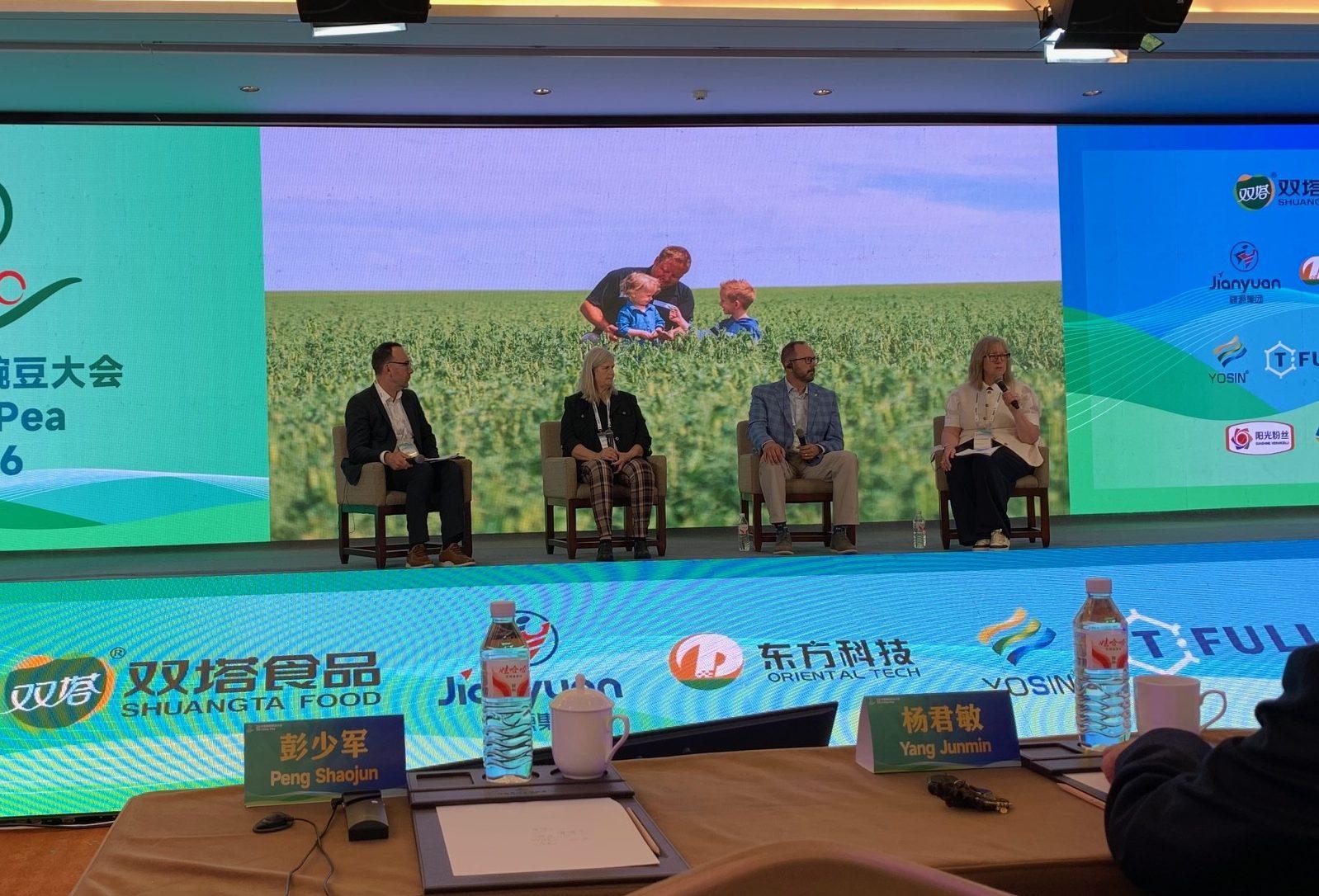
Greg Cherewyk opened the China Pea Conference with a keynote on Canadian pulse production and trade, laying out an increasingly differentiated picture across different pulse crops. Canadian peas lentils, chickpeas, and faba beans each have their own momentum and opportunity in the Chinese market. Vice President of Market Innovation Julianne Curran followed with a look at global pulse ingredient trends, pointing to continued growth in pea protein, rising interest in other pulse ingredients, and opportunity across Asia Pacific, North America, and Europe. A farmer panel, moderated by Saskatchewan Pulse Growers' Carl Potts, with growers Stuart Lawrence and Bev Wieben and Alberta Pulse Growers' Executive Director Leanne Fischbuch, gave Chinese fractionators a direct look at how Canadian growers make production decisions, manage crop protection, and build sustainability into everyday farming practice. Questions from the floor on protein content and pesticide residue made clear how closely Chinese buyers are watching Canadian production practices.
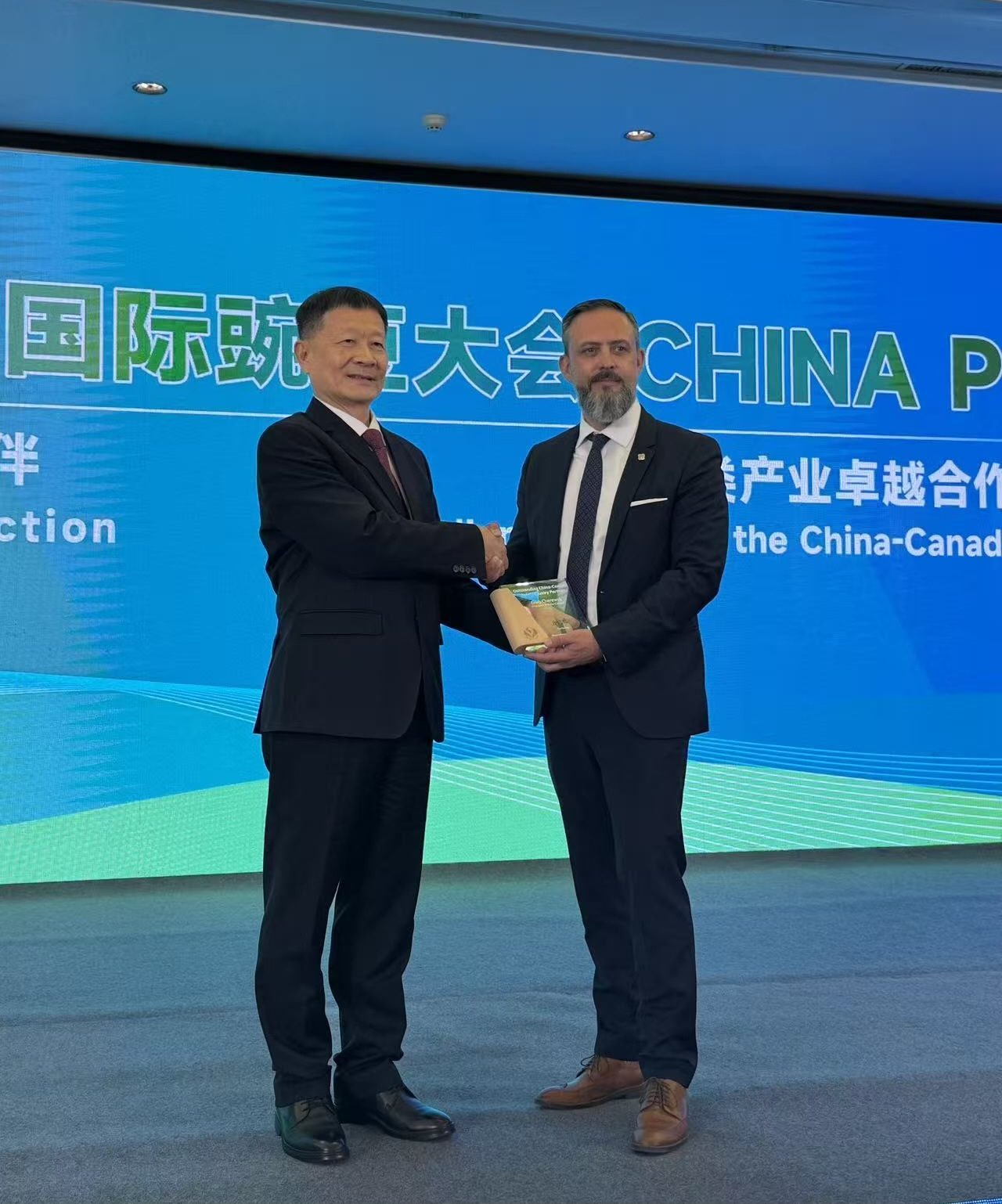
Signing this renewed MOU with CFNA is a fitting way to mark my time as Chair. This relationship has been built one visit, one conversation at a time, and it's a reminder that trust in this industry is earned, not assumed. I'm proud of what this delegation accomplished in Beijing and Zhaoyuan, and confident in the foundation we’ve built for the next chapter of this partnership.
- Terry Youzwa
Meetings in Beijing also focused on market access. There is increasing interest among Chinese companies for access to Canadian faba beans, lentils, and chickpeas. Pulse Canada staff are directly engaged with the Canadian Food Inspection Agency to ensure that technical discussions lead to protocols that are commercially feasible. At the Ministry of Commerce, discussions touched on the broader China-Canada trade relationship and how pulse trade aligns with the two countries' ambitions to double bilateral trade by 2030. None of this produces an immediate result. Real progress will take sustained, patient follow-up, but the direction of travel is encouraging.
During the visit, Pulse Canada agreed to partner with the Institute of Food and Nutrition Development of China's Ministry of Agriculture and Rural Affairs on an industry white paper. The paper will connect ingredients produced with Canadian peas to China's domestic food and nutrition priorities. The Institute described peas as a strategic bridge between traditional diets and modern nutritional needs — a framing that puts Canadian pulses squarely at the centre of China's food policy conversation. The first sections are targeted for November, with a completed paper by spring 2027.
Taken together, the week reflected what Canada’s pulse industry does best: showing up, building relationships that outlast any single meeting, and using that trust to solve the technical and regulatory barriers that stand between Canadian growers and new markets. Peas remain the anchor of the relationship, but the runway for lentils, chickpeas, and faba beans is real — and getting there will take exactly this kind of sustained, on-the-ground collaboration.
There's follow-up on every front: implementing the CFNA MOU, advancing the white paper, keeping faba, lentil, and chickpea market access moving, and staying close to fractionators as demand for their products grows in China. Pulse Canada will be back at the table for all of it, because in China, as in every market, trust is strengthened one visit at a time.
Our bi-monthly newsletter provides growers with timely, quick reads on the latest industry news and Pulse Canada’s work around the world.

Pulse Canada is the national association of growers, traders and processors of Canadian pulses, also known as lentils, dry peas, beans and chickpeas. Pulses are an essential part of a healthy and sustainable diet. Pulses and pulse ingredients can help food manufacturers improve the nutritional and functional quality of food products.