
Sep 29, 2026
Read More
Farmers don’t need to be convinced that when grain stops moving, it costs money. What’s changed is how clearly that cost has now been measured—and where the impact hits hardest.
Apr 29, 2026



Farmers don’t need to be convinced that when grain stops moving, it costs money. What’s changed is how clearly that cost has now been measured—and where the impact hits hardest.
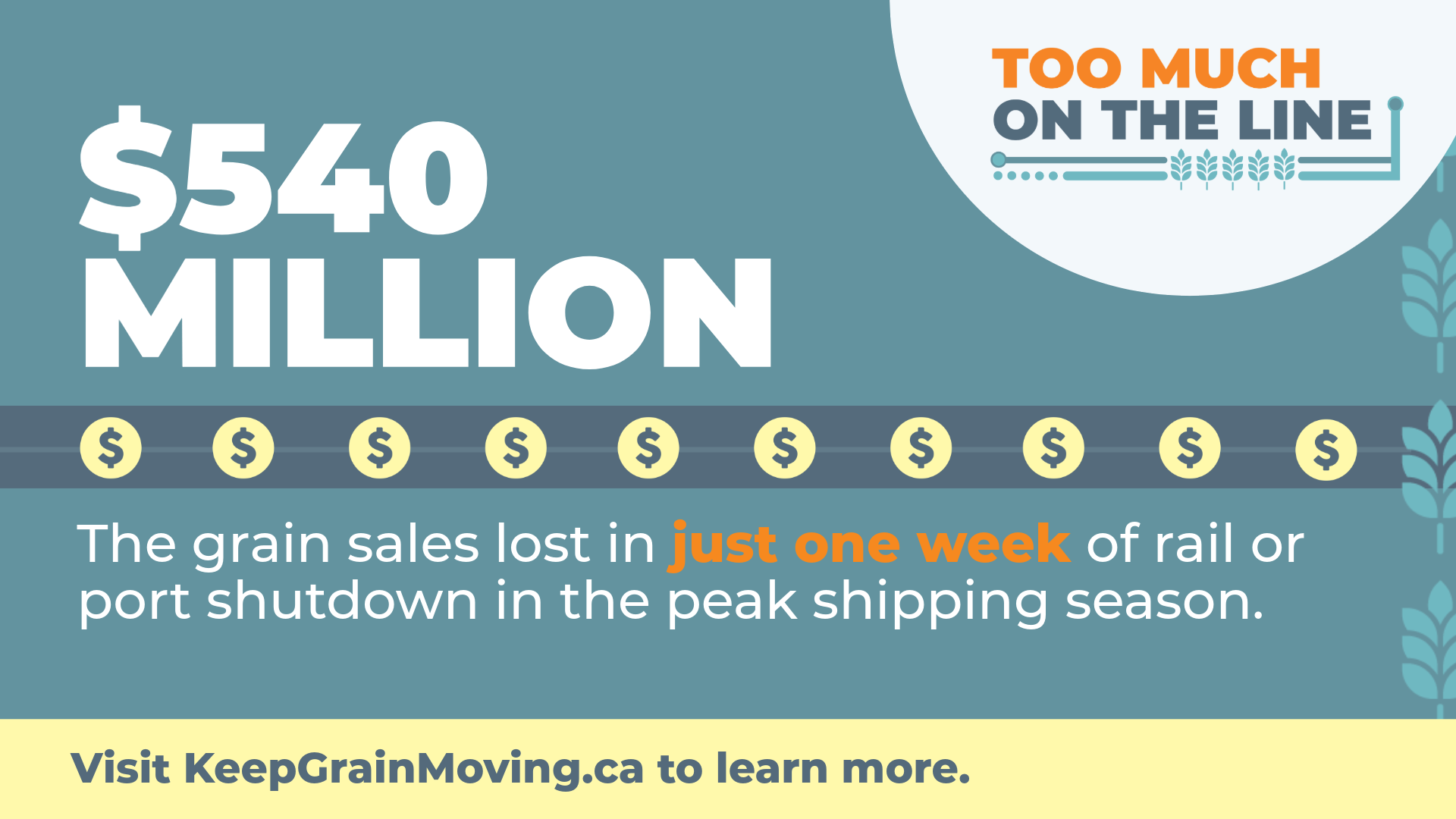
A recent independent analysis commissioned by the Ag Transport Coalition puts a hard number on it: up to $540 million can be lost in a single week during peak shipping.
But the more important finding is what drives that loss. The numbers reflect what producers have experienced firsthand: disruptions in rail and port service don’t just delay shipments—they lead to lost sales that don’t come back.
The report shows that the vast majority of the financial impact—roughly 94%—comes from reduced sales, not penalties or extra costs. In practical terms, when Canadian grain doesn’t move, customers still buy—but from somewhere else.
That matters at the farm level. When export sales are missed, the system doesn’t catch up. Grain companies are already operating close to capacity with just-in-time delivery, and the data shows those lost sales are largely permanent. Over time, that pressure means weaker basis, fewer delivery opportunities, and lower prices.
The damage doesn’t start when a strike or lockout begins. It starts before. The analysis estimates that up to $112 million in sales can be lost in the lead-up to a disruption, as the system slows down and uncertainty causes buyers to look elsewhere.
Railways may stop accepting new shipments, exporters pull back on sales, and grain movement declines even before anything officially shuts down. Data from past disruptions shows traffic dropping ahead of a stoppage and taking time to recover afterward, meaning the impact stretches well beyond the disruption itself.
For farmers, that helps explain why even short disruptions can have longer-lasting effects. By the time service is restored, some of the damage has already been done.
The report also makes it clear that not all disruptions carry the same weight. Rail is the critical pressure point. A one-week shutdown of both major railways can cost the sector more than $500 million, while a port disruption on its own is significantly less impactful.
That difference reflects how the system is built. Nearly all export grain relies on rail to reach port or market, and there are few practical alternatives at scale. When rail stops, grain movement effectively stops with it.
The impacts don’t stay within the system. When exporters lose sales or face reduced capacity, those losses flow back through the supply chain and are reflected in the price paid to farmers. Elevators fill up, deliveries slow, and cash flow tightens. Even when companies absorb some of the immediate costs, the largest impact—lost revenue—ultimately works its way upstream.
Canada’s customers expect reliability, and repeated disruptions put that at risk… this is a critical moment to ensure the right policy framework is in place.
- Greg Northey, Pulse Canada
Repeated disruptions don’t just create short-term losses—they put Canada’s reliability on the line. When sales are missed, contracts are strained, and delivery timelines become uncertain. Global buyers don’t wait. They move to other suppliers—and some don’t come back. Simply put - every time grain stops moving, the consequences are immediate and unrecoverable.
These costs are behind what’s driving a new industry effort. The Too Much on the Line campaign highlights what’s really at stake when grain movement is disrupted. The core message isn’t just that disruptions are costly—it’s that the type of loss matters. Most of the damage comes from lost sales—and those losses can’t be recovered.
That’s why the focus is on prevention. Reducing the likelihood of disruptions—or shortening them when they happen—is what actually protects the value of Canadian grain. Managing fees or penalties doesn’t change the outcome. The proposed changes focus on keeping the system functioning during labour disputes, through stronger oversight of negotiations and tools to resolve issues before they escalate into full shutdowns. As Pulse Canada’s Vice President of Corporate Affairs, Greg Northey, noted: “Canada’s customers expect reliability, and repeated disruptions put that at risk… this is a critical moment to ensure the right policy framework is in place.” For farmers, the takeaway is clear. The risk is real, the costs are measurable, and the impact shows up at the farm gate. The question now is whether the system can be improved enough to reduce that risk in a meaningful way.
With federal consultations on the issue underway, the Too Much on the Line campaign is asking farmers and industry participants to take a closer look at the data and make their perspectives known. Participating in this process will help ensure that the realities on the ground are reflected in the decisions being considered. Because when grain stops moving, the data confirms what producers already know—the cost doesn’t stay in the system. It comes back to the farm.
Visit KeepGrainMoving.ca to learn more and send a letter to Ministers and your Member of Parliament.
Our bi-monthly newsletter provides growers with timely, quick reads on the latest industry news and Pulse Canada’s work around the world.

Pulse Canada is the national association of growers, traders and processors of Canadian pulses, also known as lentils, dry peas, beans and chickpeas. Pulses are an essential part of a healthy and sustainable diet. Pulses and pulse ingredients can help food manufacturers improve the nutritional and functional quality of food products.